


World Cups are remembered for champions, iconic goals, and defining moments. Yet sometimes history leaves its mark in a far more subtler way.
On June 15, 2026, the FIFA World Cup produced one of the most unusual statistical coincidences the tournament has ever seen.
Across four matches played, every game ended level.
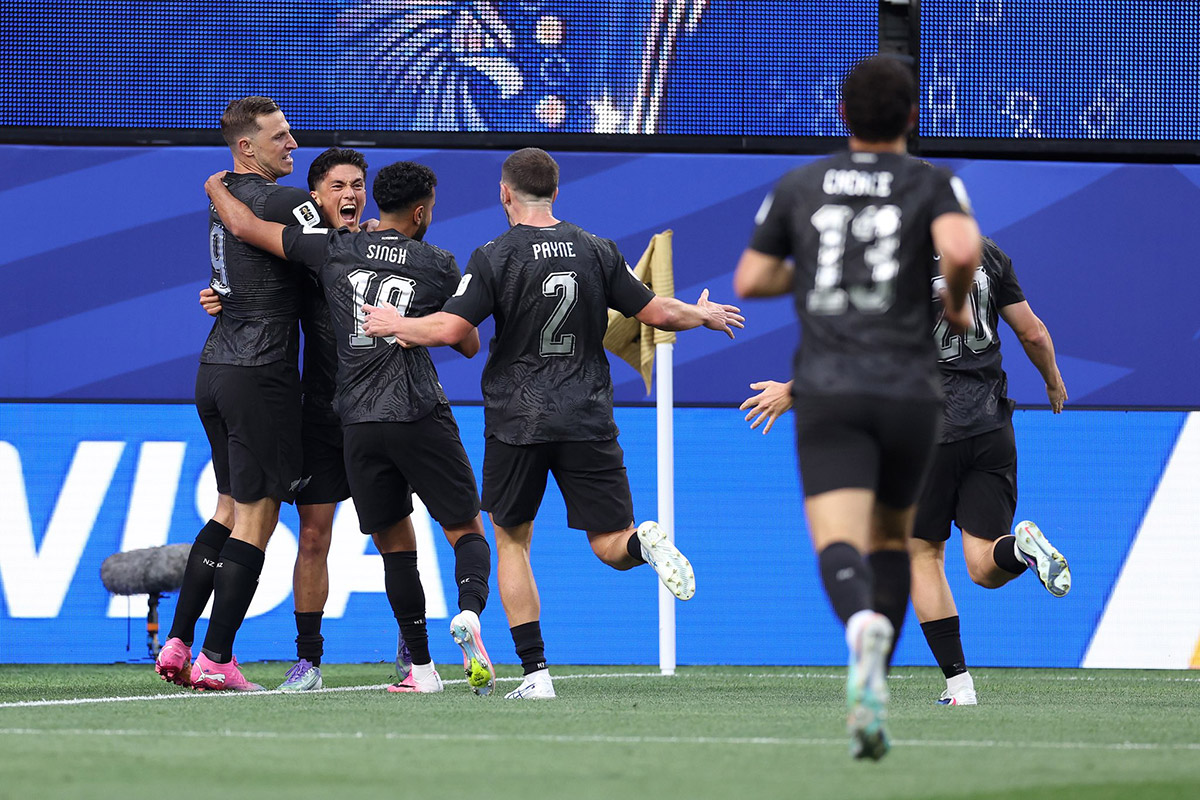
Spain were held 0-0 by Cabo Verde, Belgium shared the points with Egypt in a 1-1 draw, Saudi Arabia and Uruguay too ended 1-1 as the teams could not be separated, and Iran played out a thrilling 2-2 stalemate with New Zealand.
But in addition to being an unusual day, it was a day that echoed one from another era.
History repeats itself on June 15
Exactly 68 years earlier, on June 15, 1958, the World Cup in Sweden had also witnessed four draws on the same date. Across eight matches played that day, half ended without a winner.
The four stalemates came between Sweden and Wales (0-0), West Germany and Northern Ireland (2-2), England and Austria (2-2), and Yugoslavia and Paraguay (3-3).
The coincidence is remarkable enough on its own. The fact that both occurrences happened on the same calendar date elevates it into the realm of football folklore.
There is, however, one significant difference between the two occasions.
In 1958, four draws emerged from a schedule of eight matches. In 2026, every match played on June 15 ended level. But nonetheless, it was a reminder that football’s greatest tournament remains wonderfully and absolutely unpredictable.
The stories behind the stalemates
While the scorelines themselves tell different stories, the absence of winners was only part of the story. June 15, 2026 has become a collection of statistical oddities and historic milestones.
In Atlanta, Cabo Verde earned the first World Cup point in the nation’s history while committing just a single foul over 90 minutes.
Spain, meanwhile, registered 27 shots without scoring, matching one of the highest shot totals ever recorded by the country in a scoreless World Cup match.
In Seattle, Mohamed Salah celebrated his birthday by providing an assist for Egypt, while the Pharaohs extended one of the tournament’s longest-running records. Despite taking the lead, they remained without a victory in World Cup finals competition.
Miami witnessed the closing of one chapter and the opening of another.
Uruguay played a World Cup match without Luis Suarez or Edinson Cavani on the roster for the first time since 2002, while Maximiliano Araujo announced himself on the global stage with a goal on his tournament debut.
Then came Los Angeles, where New Zealand’s Elijah Just became the first player from his nation to score multiple goals at a single World Cup.
Across the field, Iran’s Ramin Rezaeian carved out a piece of history of his own by becoming the first Iranian player to record both a goal and an assist in the same World Cup match.
None of those achievements, on their own, would define a World Cup. Surely not. But together, they formed part of a date that now occupies a unique place in tournament history.