


Some World Cup matches are remembered because they crown champions. Others become part of football history because they seem to defy reason. Argentina’s astonishing 3-2 comeback victory over Egypt Tuesday belonged firmly in the second category.
Two goals behind with only 11 minutes remaining, the South Americans were staring at one of the great upsets in tournament history before Lionel Messi once again rewrote the script.
The Argentine captain scored, provided an assist, broke records, and inspired a revival that kept the reigning champions alive and helped produce one of the most dramatic knockout comebacks the World Cup has ever witnessed.
Here are five talking points from the match.
Messi’s penalty miss nearly became the defining image
Even football’s greatest players are not immune to moments of vulnerability.
Messi’s missed penalty looked destined to become the image that defined Argentina’s elimination. It, however, became merely the opening chapter of an unforgettable comeback.
The failure carried historic significance of its own. Messi became the first player ever to miss or fail to convert two penalties during a single Men’s World Cup tournament, an astonishing statistic given his otherwise relentless excellence on football’s biggest stage.
For much of the evening, that miss appeared set to haunt Argentina.
While Messi’s rare lapse from the spot only amplified the pressure, every Egyptian attack increased the sense that the Albiceleste’s title defence was slipping away.
Egypt showed remarkable resilience before heartbreak arrived
If the final score belonged to Argentina, much of the night’s admiration belonged to Egypt.
The Pharaohs, after taking the lead early in the match, thought they had seized complete control when they found the net for the second time through Mostafa Ziko.
But a lengthy VAR review ruled the effort out. While many teams would have allowed frustration to consume them, Egypt did precisely the opposite.
They immediately attacked again and scored a legitimate goal just moments later, restoring their advantage through sheer determination. It was a response that demonstrated remarkable mental strength and completely rattled Argentina’s defensive structure.
Maradona’s record falls during another Messi masterpiece
The comeback will be remembered for Messi’s goal, but his decisive assist carried equal historical weight.
His perfectly timed pass, which allowed Cristian Romero to score, officially moved him beyond countryman Diego Maradona for the most assists (9) in Men’s World Cup history.
It was another landmark in a career that continues to redefine what excellence looks like.
Breaking a record held by Argentina’s most revered football icon would have been significant under any circumstances. Doing so while dragging his nation back from the edge of elimination elevated the moment into something far more cinematic.
Argentina finally erased a curse decades in the making
Until this remarkable night, Argentina had never recovered from trailing by two or more goals in a World Cup match. Their record stood at 0-13.
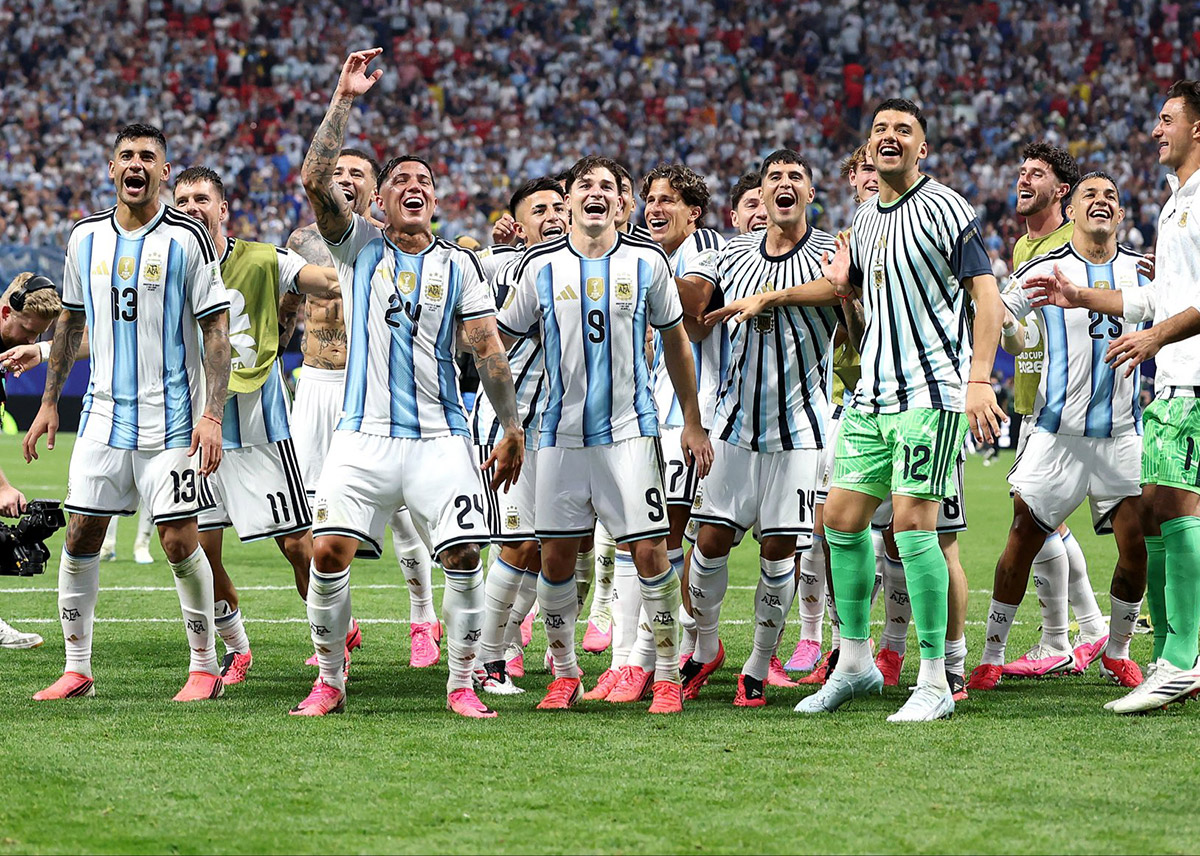
That unwanted statistic disappeared in breathtaking fashion. Trailing until the 79th minute, Argentina produced a devastating attacking burst, scoring three times in just 13 minutes and 15 seconds to complete one of the tournament’s greatest escapes.
The winning goal carried even greater significance.
It was the 3,000th goal scored in Men’s World Cup history and was a fitting milestone for a match that felt destined to occupy a unique place in tournament history.
Messi’s Golden Boot charge gathers unstoppable momentum
Finally, the comeback also strengthened Messi’s extraordinary individual campaign.
The 39-year-old’s goal extended an unprecedented scoring streak to nine consecutive World Cup matches, the longest ever recorded by a player in the competition.
It also moved his all-time World Cup tally to 21 goals, extending yet another record in an international career already overflowing with milestones.
Just as importantly, the goal temporarily lifted him to the top of the Golden Boot standings with eight goals, above Norway’s Erling Haaland (7) and France’s Kylian Mbappe (7).
But perhaps the most remarkable aspect of the evening was that none of those records felt like the main story. Instead, they became supporting chapters in a match that combined heartbreak, resilience, history, and redemption all into 90 unforgettable minutes.